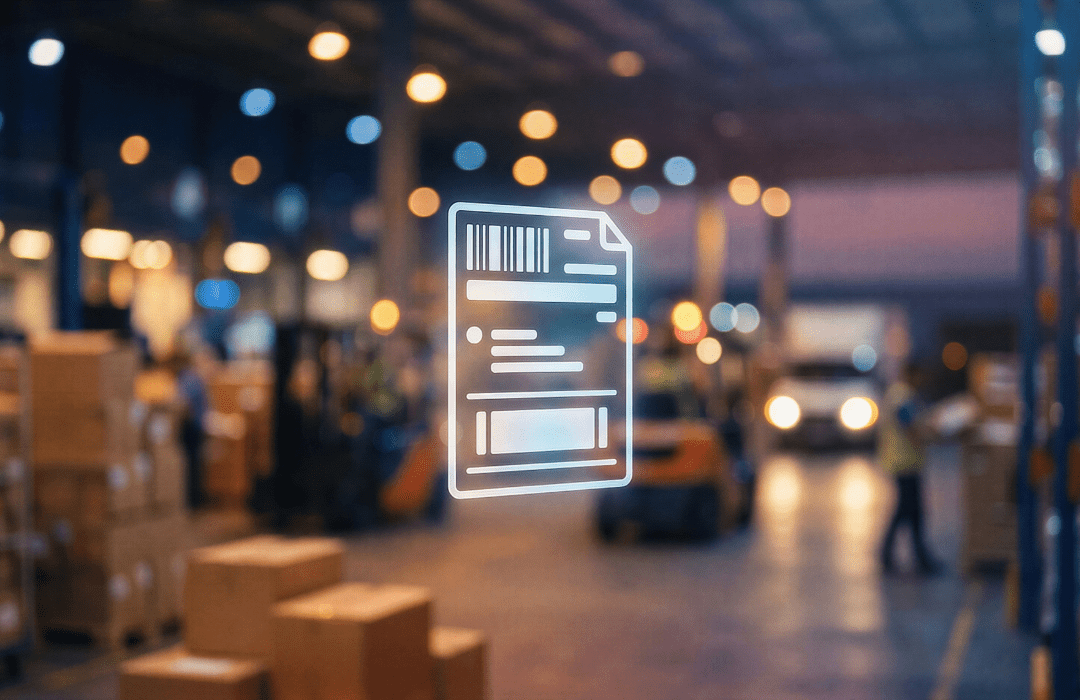
For an industry that moves millions of tonnes of cargo globally every day, freight forwarding still relies heavily on paperwork.
But that’s finally starting to change.
In 2026, the shift towards paperless trade and digital documentation is gaining real momentum – and it could transform how goods move across borders.
Why paperwork is still holding the industry back
Despite advances in technology, much of global trade still runs on manual documentation.
Bills of lading, customs declarations, commercial invoices – the list goes on.
These paper-based processes can create:
- Delays caused by lost or incomplete documents
- Increased risk of human error
- Slower customs clearance
- Added administrative costs
For global supply chains under pressure to move faster and more efficiently, that’s a problem.
Digital documents are gaining traction
The good news is that change is happening.
Electronic documentation – particularly eBills of Lading (eBLs) – is becoming more widely adopted across the industry, with major shipping lines committing to digitising documents in the coming years. [startus-insights.com]
By replacing paper with secure digital alternatives, businesses can:
- Reduce processing times
- Improve accuracy
- Minimise delays at borders
- Improve visibility across the supply chain
What’s driving the shift?
Several factors are pushing the move towards paperless freight:
Speed and efficiency expectations
Customers expect faster delivery and real-time updates. Paper documents simply can’t keep up.
Rising customs complexity
With more detailed compliance requirements, digital documentation helps reduce errors and streamline processes.
Cost pressures
Paper-based processes are labour-intensive. Digitisation reduces administration and unlocks efficiency.
Industry collaboration
Carriers, ports, and logistics providers are increasingly aligned on adopting digital standards.
The role of freight forwarders
Freight forwarders are at the centre of this transition.
They’re not just adopting digital tools – they’re helping customers:
- Move away from outdated processes
- Integrate digital documentation into operations
- Improve accuracy and compliance
- Speed up international shipments
For many businesses, having a forwarder who understands digital trade is becoming essential.
What’s next?
We’re not at full digital adoption yet – but the direction is clear.
As more organisations commit to paperless processes, the industry could see:
- Faster global trade flows
- Fewer delays caused by documentation errors
- Greater transparency across the supply chain
For businesses that adapt early, the benefits will be significant.
Because in freight forwarding, speed isn’t just about transport anymore – it’s about information.