Understanding Trailer
Specifications
Trailers come in a variety of sizes and configurations to meet the diverse needs of transportation and logistics. Whether you’re moving goods, vehicles, or heavy equipment, selecting the right trailer is essential for ensuring safe and efficient transport.
This guide outlines the most common trailer sizes and specifications, helping you choose the best option for your requirements.
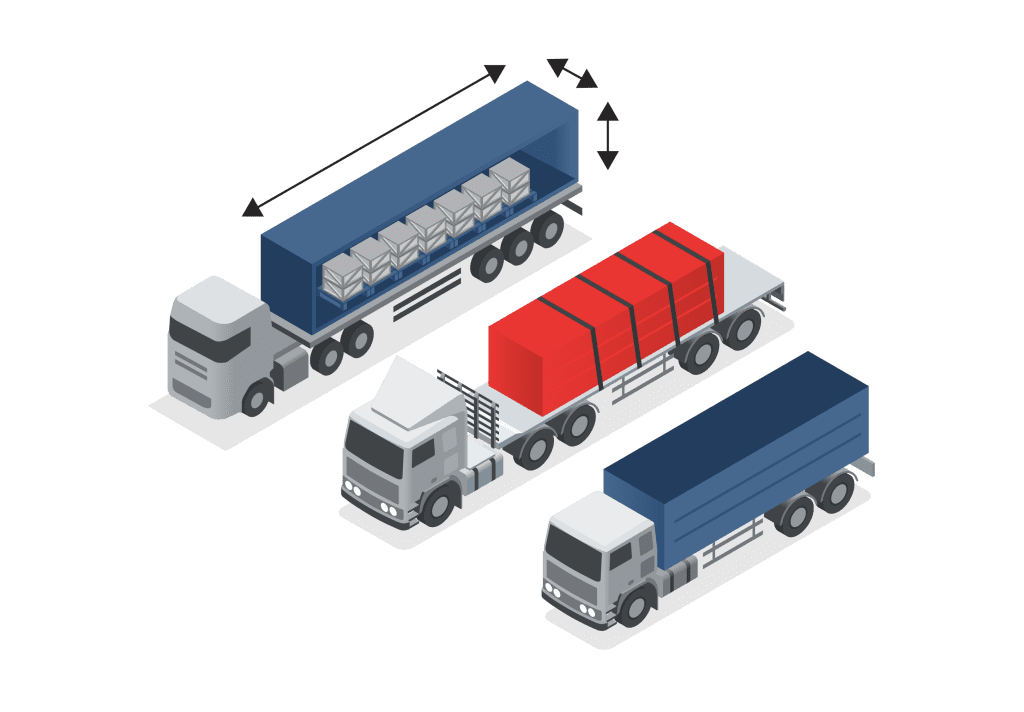

Summary of standard trailer types
Please note that trailer dimensions and configurations may vary slightly due to changes in manufacturing processes. If you have specific size or loading requirements, it’s important to confirm these in advance to ensure the trailer meets your needs.
These specifications provide a general overview of the most common trailer types and their features.
Types of trailers
- Flatbed Trailers: These trailers have an open platform with no sides or roof, making them ideal for transporting oversized or irregularly shaped cargo. They are commonly used for construction materials, machinery, and large equipment.
- Dry Van Trailers: Enclosed trailers with sides and a roof, providing protection from the elements and security for the cargo. They are commonly used for transporting general freight, electronics, and consumer goods.
- Refrigerated Trailers (Reefers): These trailers are equipped with temperature control systems to transport perishable goods such as food, pharmaceuticals, and chemicals.
- Lowboy Trailers: Designed for transporting heavy equipment and machinery, lowboy trailers have a low deck height, allowing for the transport of tall items that cannot be transported on standard trailers.
- Car Haulers: Specialised trailers designed for transporting vehicles. They come in various configurations, including single-level and multi-level trailers, to accommodate different numbers of vehicles.
Making your selection
When selecting a trailer, consider the following factors:
- Type of Cargo: Determine whether your goods require special handling, such as temperature control or extra height.
- Volume and Weight: Ensure the trailer can accommodate the volume and weight of your cargo.
- Destination: Consider the shipping regulations and infrastructure at the destination to ensure compatibility with the trailer type.
| Dimensions | Box Trailer | Curtain Sider | Flatbed Trailer | Mega Trailer | Reefer | Euroliner |
|---|---|---|---|---|---|---|
Designed for transporting freight in a secure, enclosed environment. |
Designed for flexible side and rear loading and unloading. |
Designed for transporting oversized or irregularly shaped cargo. |
Designed for carrying high-volume freight, with increased loading height. |
Designed for transporting chilled, frozen and temperature-sensitive goods. |
Designed for flexible side, rear and roof loading. | |
Overall length |
13.6m |
13.72m |
13.95m |
13.7m |
13.5m |
13.7m |
Overall width |
2.5m |
2.55m |
2.55m |
2.6m |
2.6m |
2.6m |
Overall height |
2.9m |
2.9m |
– |
4m |
4m |
4m |
Internal width |
2.44m |
2.44m |
2.48m |
2.48m |
2.46m |
2.48m |
Internal length |
13.57m |
13.56m |
13.62m |
13.62m |
13.3m |
13.62m |
Internal height |
2.7m |
2.46m |
– |
3m |
2.65m |
2.65m (front) 2.75m (rear) |
Gross weight |
34,000kg |
34,000kg |
31,900kg |
39,000kg |
39,000kg |
39,000kg – 41,000kg |
Tare weight |
4,450kg – 4,550kg |
5,900kg |
6,500kg |
7,400kg |
8,600kg |
6,880kg – 7,100kg |
Cubic capacity |
90m³ |
91m³ |
– |
100m³ |
90m³ |
87m³ |
Frequently asked questions
The most common standard sizes for trailers include 20-foot, 40-foot, and 53-foot lengths. These trailers are typically 8.5 feet wide. The height can vary depending on the type of trailer, such as flatbed, dry van, or refrigerated trailers.
A flatbed trailer is an open platform with no sides or roof, making it ideal for transporting oversized or irregularly shaped cargo. A dry van trailer is an enclosed trailer with sides and a roof, providing protection from the elements and security for the cargo.
The right trailer depends on the size, weight, and nature of your cargo, as well as any specific loading or transport requirements. Our team can advise on the most suitable trailer type to ensure your goods are moved safely and efficiently.
Yes, there are several types of specialised trailers designed for specific cargo needs, including refrigerated trailers (reefers) for perishable goods, lowboy trailers for heavy equipment, and car haulers for transporting vehicles.
Each trailer has a maximum payload based on its design and configuration. However, actual loading and transport weights will also be governed by legal road weight limits in the country of loading and unloading.