
A Guide to Choosing the Right Container
Shipping containers come in various sizes and specifications to meet the diverse needs of businesses and individuals.
Whether you’re shipping internationally, storing goods, or converting containers for other uses, understanding container types and specifications is essential. This guide outlines the most common sizes and features to help you make informed decisions for your logistics.
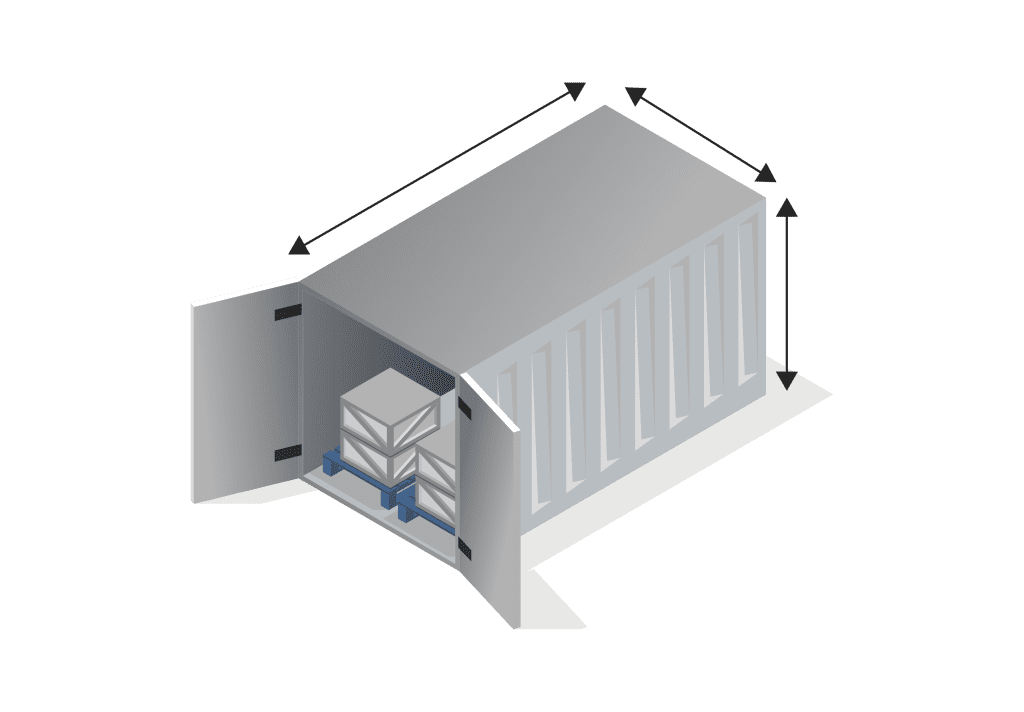

Types of shipping containers
- Standard Dry Containers: These are the most common containers used for general cargo. They come in 20-foot and 40-foot sizes and are suitable for most types of goods.
- High Cube Containers: These containers are similar to standard dry containers but offer an additional foot of height, making them ideal for bulky or tall items.
- Refrigerated Containers (Reefers): These containers are equipped with temperature control systems to transport perishable goods such as food, pharmaceuticals, and chemicals.
- Open-Top Containers: These containers have a removable top, allowing for easy loading and unloading of oversized cargo that cannot fit through standard container doors.
- Flat Rack Containers: These containers have collapsible sides and are used for transporting heavy machinery, vehicles, and other oversized items that require loading from the top or sides.
Making your selection
When selecting a shipping container, consider the following factors:
- Type of Cargo: Determine whether your goods require special handling, such as temperature control or extra height.
- Volume and Weight: Ensure the container can accommodate the volume and weight of your cargo.
- Destination: Consider the shipping regulations and infrastructure at the destination to ensure compatibility with the container type.

Summary of standard equipment sizes
Please note that standard equipment sizes may vary slightly due to changes in manufacturing processes. If you have specific dimension requirements, it’s important to confirm these in advance.
These specifications provide a general overview of container types. Weight limits shown reflect the maximum payload based on container design; actual loading and transport will be subject to legal road limits in the country of loading and unloading.
Specifically for the UK we recommend max loading upto 27.7 tons in a 20ft General and 26 tons in a 40ft or 45ft General or High Cube to allow for UK road weight limits.
| 20FT GENERAL PURPOSE | |||||
|---|---|---|---|---|---|
| Door opening height | Door opening width | Internal length | Internal width | Internal height | Max cargo weight |
| 228cm | 234cm | 589cm | 235cm | 239cm | 28,330kg |
| 40FT GENERAL PURPOSE | |||||
|---|---|---|---|---|---|
| Door opening height | Door opening width | Internal length | Internal width | Internal height | Max cargo weight |
| 228cm | 234cm | 1,203cm | 235cm | 239cm | 26,840kg |
| 40FT HIGH CUBE GENERAL PURPOSE | |||||
|---|---|---|---|---|---|
| Door opening height | Door opening width | Internal length | Internal width | Internal height | Max cargo weight |
| 258cm | 234cm | 1,203cm | 235cm | 269cm | 28,800kg |
| 45FT HIGH CUBE GENERAL PURPOSE | |||||
|---|---|---|---|---|---|
| Door opening height | Door opening width | Internal length | Internal width | Internal height | Max cargo weight |
| 258cm | 234cm | 1,355cm | 235cm | 269cm | 27,850kg |
| 45FT PALLET WIDE GENERAL PURPOSE | |||||
|---|---|---|---|---|---|
| Door opening height | Door opening width | Internal length | Internal width | Internal height | Max cargo weight |
| 258cm | 242cm | 1,355cm | 244cm | 269cm | 29,250kg |
| 20FT REEFER | ||||||||
|---|---|---|---|---|---|---|---|---|
| Door opening height | Door opening width | Internal length | Internal width | Internal height | External length | External width | External height | Max cargo weight |
| 222cm | 229cm | 545cm | 228cm | 226cm | 605cm | 243cm | 259cm | 27,670kg |
| 40FT HIGH CUBE REEFER | ||||||||
|---|---|---|---|---|---|---|---|---|
| Door opening height | Door opening width | Internal length | Internal width | Internal height | External length | External width | External height | Max cargo weight |
| 250cm | 229cm | 1,159cm | 228cm | 254cm | 1,219cm | 243cm | 289cm | 30,510kg |
| 20FT FLAT RACK | ||||||
|---|---|---|---|---|---|---|
| Internal length (between corner posts) | Internal width (between side rails) | Internal height | External length | External width | External height | Max cargo weight |
| 556cm | 219cm | 221cm | 605cm | 243cm | 259cm | 35,000kg |
| 40FT FLAT RACK | ||||||
|---|---|---|---|---|---|---|
| Internal length (between corner posts) | Internal width (between side rails) | Internal height | External length | External width | External height | Max cargo weight |
| 1,165cm | 220cm | 195cm | 1,219cm | 243cm | 259cm | 38,800kg |
| 40FT HIGH CUBE FLAT RACK | ||||||
|---|---|---|---|---|---|---|
| Internal length (between corner posts) | Internal width (between side rails) | Internal height | External length | External width | External height | Max cargo weight |
| 1,165cm | 237cm | 226cm | 1,219cm | 243cm | 289cm | 52,500kg |
| 20FT OPEN TOP | ||||||||
|---|---|---|---|---|---|---|---|---|
| Door opening height | Door opening width | Roof opening length | Roof opening width | Swing header opening | Internal length | Internal width | Internal height | Max cargo weight |
| 228cm | 234cm | 568cm | 225cm | 194cm | 589cm | 235cm | 234cm | 28,240kg |
| 40FT OPEN TOP | ||||||||
|---|---|---|---|---|---|---|---|---|
| Door opening height | Door opening width | Roof opening length | Roof opening width | Swing header opening | Internal length | Internal width | Internal height | Max cargo weight |
| 228cm | 234cm | 1,179cm | 223cm | 194cm | 1,202cm | 235cm | 234cm | 26,600kg |
| 40FT HIGH CUBE OPEN TOP | ||||||||
|---|---|---|---|---|---|---|---|---|
| Door opening height | Door opening width | Roof opening length | Roof opening width | Swing header opening | Internal length | Internal width | Internal height | Max cargo weight |
| 258cm | 234cm | 1,180cm | 219cm | 194cm | 1,203cm | 235cm | 265cm | 28,610kg |
Frequently asked questions
The most common standard sizes for shipping containers are 20 feet and 40 feet in length. These containers are typically 8 feet wide and 8.5 feet high. There are also high cube containers, which are 9.5 feet high, providing extra vertical space.
A standard container is 8.5 feet high, while a high cube container is 9.5 feet high. The additional height of high cube containers makes them ideal for transporting or storing taller items or for conversions that require extra headroom.
The right container depends on the size, weight, and nature of your cargo, as well as any specific handling or transport requirements. Our team can advise on the most suitable container type to ensure your goods are transported safely and efficiently.
Yes, there are several types of specialised containers designed for specific cargo needs, including refrigerated containers (reefers) for perishable goods, open-top containers for oversized cargo, and flat rack containers for heavy machinery and equipment.
Each container has a maximum payload based on its design and construction. However, actual loading and transport weights will also be subject to legal road weight limits in the country of loading and unloading.